


Yearly Symposium
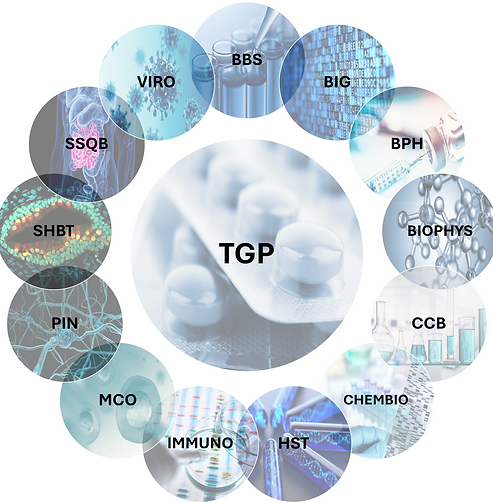
As part of our mission to provide a platform for knowledge exchange and collaboration, the TGP holds an annual symposium showcasing some of the most novel research and developments in Therapeutics. From Harvard faculty, to industry experts, and our own TGP students, the TGP Symposium highlights the talents within our program and in the field.
2025
A Celebration of our Home Programs
13 Years, 13 Programs, Unlimited Possibilities
Oct 16th, 10:00 am - 4:00 pm
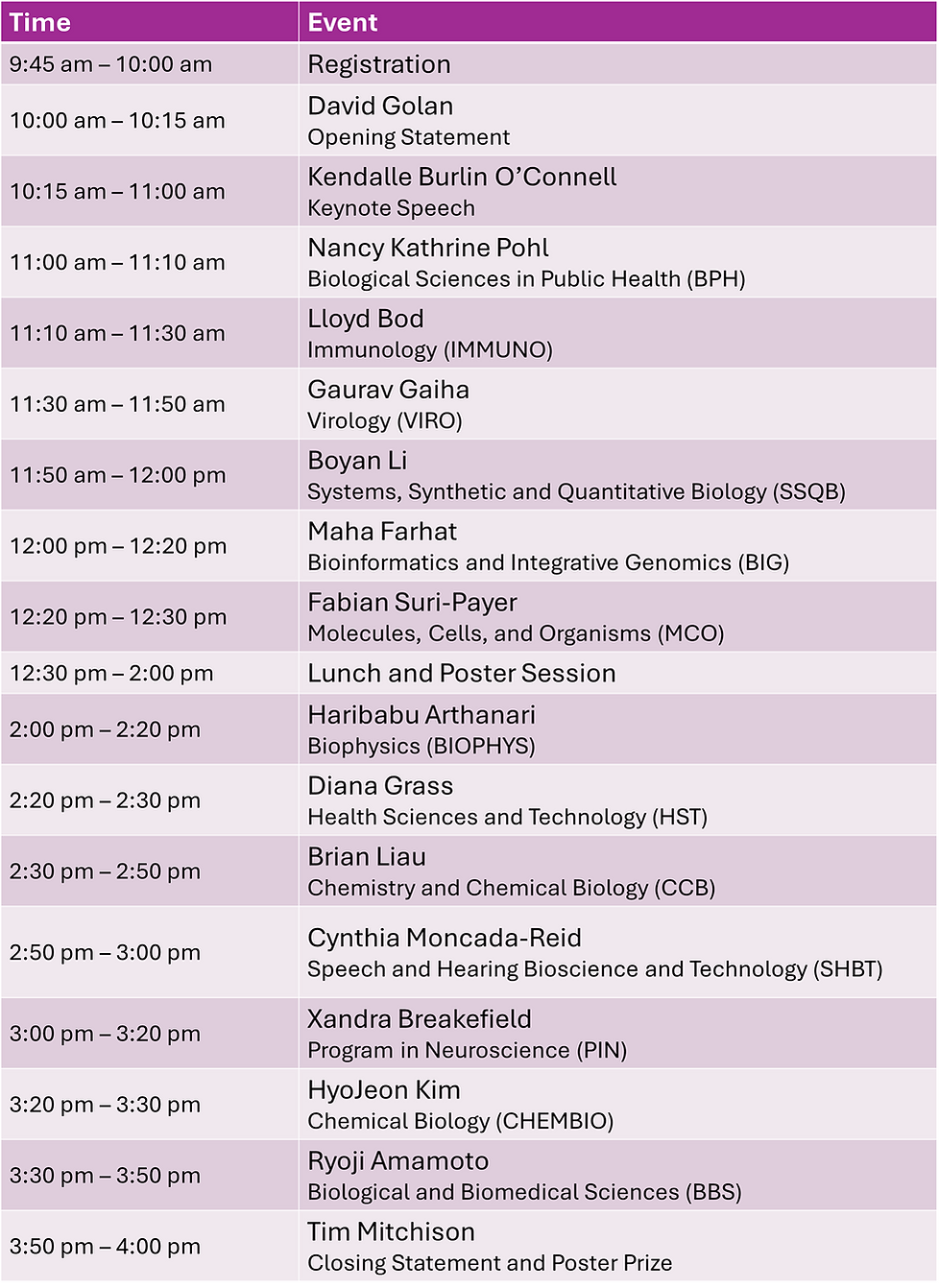

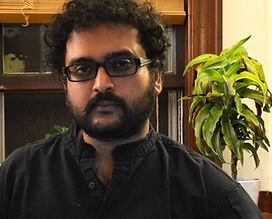

Faculty Speaker (BBS): Ryoji Amamoto, Ph.D.
Ryoji completed his PhD in the BBS Program at Harvard under the mentorship of Paola Arlotta. His thesis revolved around a unique project where I looked at the mechanism of brain regeneration in axolotls. As a postdoctoral fellow in the lab of Connie Cepko at Harvard, I worked on projects to understand the mechanisms of cone degeneration and survival as well as developing Probe-Seq and FIN-Seq. Now as an Assistant Professor, his lab’s long-term goal is to create a novel gene therapy-based therapeutic to preserve and restore healthy vision for patients suffering from diseases that cause irreversible blindness.
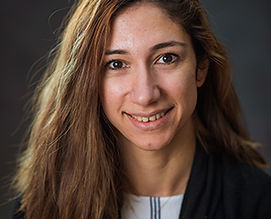
Faculty Speaker (BIG): Maha Farhat, Ph.D.
Maha's research focuses on the development and application of methods for associating genotype and phenotype in infectious disease pathogens, with a strong emphasis on translation to better diagnostics and surveillance in resource-poor settings. To date, Farhat's work has focused on the pathogen Mycobacterium tuberculosis and spans the spectrum from computational analysis to field studies. She is PI and Co-Investigator on several projects funded by NIH including the NIAID and the BD2K initiative.
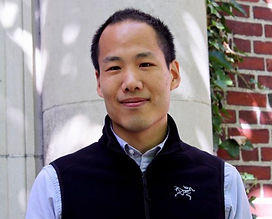
Faculty Speaker (CCB): Brian Liau, Ph.D.
Brian graduated from Harvard College in 2007, conducting undergraduate research with EJ Corey. He later received his Ph.D. in Chemistry with Matthew Shair at Harvard, where he worked on the total synthesis of complex natural products and later studied their mechanisms of action. Brian was then a postdoctoral fellow with Bradley Bernstein where he investigated epigenetic mechanisms of adaptation and drug resistance in brain cancer. Brian started his independent lab in 2016. The lab’s work in chemical genomics has been recognized by the Milton Fund, an NIH Director’s New Innovator Award, an Ono Pharma Breakthrough Science Initiative Award, a Star Family Prize for Excellence in Faculty Advising, a Damon Runyon-Rachleff Innovation Award, an American Cancer Society Research Scholar Grant, an Eli Lilly Award in Biological Chemistry, and more.
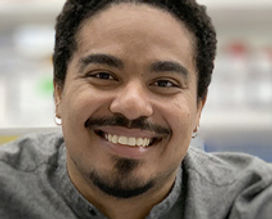
Faculty Speaker (IMMUNO): Lloyd Bod, Ph.D.
The Bod Lab focuses on deciphering the landscape of phenotypic and functional B cell states in inflammatory diseases, in particular cancer. He is interested in exploring which B cell subset is favorable or detrimental for cancer progression, and by which mechanisms these B cells control tumor growth. The lab's thorough examination of the B cell response towards cancer aims to provide a new angle to harness the anti-tumor immune response more effectively. Historically, B cells have been at the forefront of research in allergies, infectious diseases, and vaccines. Beyond mediating the humoral response, B cells are potent antigen presenting cells (APCs) and can provide co-stimulatory or co-inhibitory signals and secrete cytokines and chemokines that regulate functions of other cell types including effector T cells.
Faculty Speaker (PIN): Xandra Breakefield, Ph.D.
The Breakefield laboratory uses molecular genetic techniques to elucidate the etiology of inherited neurologic diseases and to develop vectors, which can deliver genes to the nervous system. A plasmid-based amplicon vector derived from herpes simplex virus type 1 has been developed for non-toxic gene delivery to neural cells. This vector, which uses the herpes virion for gene delivery, can carry large transgenes (>150 kb), and has been modified to include elements that promote episomal retention or site-specific integration into the host cell genome.
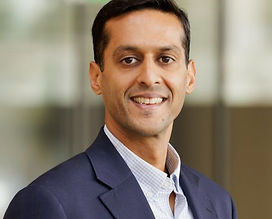
Faculty Speaker (VIRO): Gaurav Gaiha, M.D., D.Phil.
Gaurav is an Assistant Professor of Medicine at Harvard Medical School and Attending Physician in the Division of Gastroenterology at Massachusetts General Hospital (MGH). His lab focuses on understanding the T cell response to viral diseases and GI cancer, with the goal of identifying T cell targets that can be used to drive rational design of vaccines and treatments. He is a recipient of the NIAID New Innovators DP2 Award (2020), the Gilead HIV Scholars Research Award (2020) and the Burroughs Wellcome Career Award for Medical Scientists (2019). He also received the Fellows Award for Excellence in Clinical Teaching from the MGH Department of Medicine.
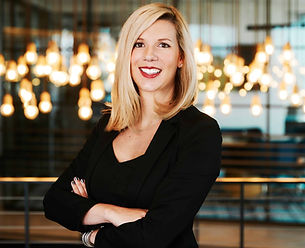
Keynote: Kendalle Burlin O’Connell, Esq.
Kendalle Burlin O’Connell is a seasoned and effective executive who has received wide acclaim for her leadership of MassBio. As CEO and President of the world’s largest and oldest biopharma membership organization, Kendalle drives the strategy to grow the industry and support member companies, while advocating for policies that enable healthcare innovation and unlock breakthrough therapies for patients around the world. For more than 16 years, Kendalle has sought to deliver for MassBio’s now 1,700+ members through the launch of new initiatives, programs, and events while pushing the industry to new heights by convening and connecting key stakeholders and promoting collaboration.
Main Atrium:
-Merck Research Laboratories
33 Avenue Louis Pasteur, Boston, MA 02115
- Walking distance from Longwood Campus, and opposite NRB.
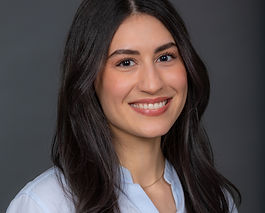
Student Speaker (BPH): Nancy Pohl
I am a fifth-year PhD student in Naama Kanarek’s lab at Boston's Children’s Hospital. I study the cellular signaling and metabolic response to one-carbon metabolism perturbation in erythroid cells.
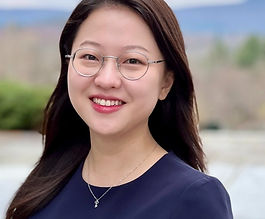
Student Speaker (CHEMBIO): HyoJeon Kim
I am a fifth-year PhD student in Dr. Phil Cole’s laboratory at Brigham and Women’s Hospital. I am interested in the chemical biology of protein post-translational modifications, particularly ubiquitination.
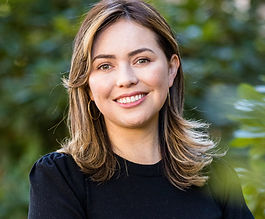
Student Speaker (HST): Diana Grass
I am a fourth-year PhD student in Medical Engineering and Medical Physics in the joint Harvard-MIT Health Sciences and Technology program, researching in Polina Anikeeva's lab. My research focuses on investigating the interactions between the nervous and immune systems within the context of chronic inflammation (CI).
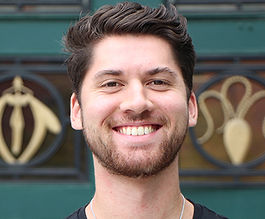
Student Speaker (MCO): Fabian Suri-Payer
I am a fourth-year PhD student in Anna Greka’s laboratory at the Broad Insitute. My research focuses on the protein trafficking and accumulation of mutant SERPINA1, which causes the genetic disorder alpha-1 antitrypsin deficiency (AATD). I also aim to develop a therapeutic strategy for a possible treatment of AATD based on my findings.
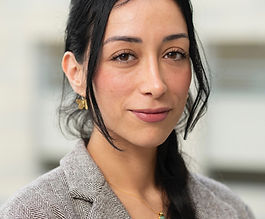
Student Speaker (SHBT): Cynthia Moncada-Reid
I am a fifth-year PhD student in Lisa Goodrich’s lab, I use genetic, molecular, and single-cell approaches to investigate how transcription factors influence synaptic heterogeneity in the cochlea. My research focuses on spiral ganglion neurons (SGNs), which transmit sound information from the ear to the brain.

Student Speaker (SSQB): Boyan Li
I am a fourth-year PhD student in Timothy Mitchison’s lab at Harvard Medical School. I study the pharmacokinetics and pharmacodynamics of microtubule drugs, using a combination of experimental cell and chemical biology and mathematical modeling.
Yossef Baidi, G5 in CHEMBIO (Beroukhim Lab)
Ruitong Li, G5 in BIG (Getz Lab)
Nikola Mizgier, G5 in BBS (Adelman Lab)
Zack Murphy, G3 in BBS (Young-Pearse Lab)
Sherin Xirenayi, G3 in SSQB (Van Allen Lab)
more TBA